

This week’s takeaway comes from a short YouTube video that actually taught me something without wasting my time with fluff. I shared this on my social media page recently, but I love the topic and wanted to write more on it here.
Big thanks to Phil Hollandsworth for putting the video together. His three-minute video on how to read the beach surf for fishing was clear and didn’t try to stretch a 90-second idea into a 20-minute monologue.
Watch Phil Hollandsworth’s video
There’s a saying in the fishing world: “10% of anglers catch 90% of the fish.” This is because they know how to read the water.
I’ll do my best to consolidate the video here as much as possible.
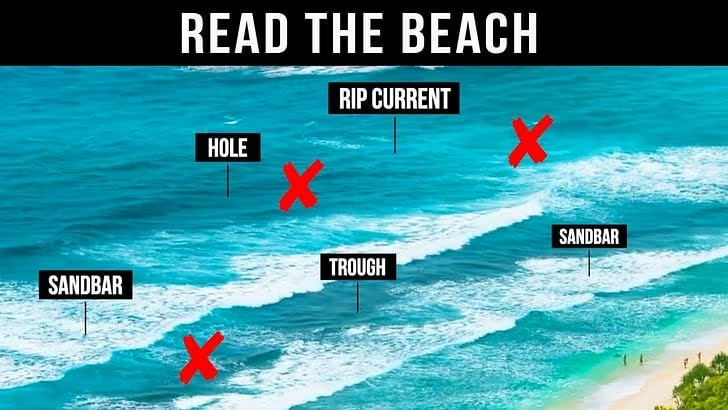
1. Spot the Sandbar
Waves break over shallow water. That long whitewater line offshore is the sandbar.
2. Find the Trough
Between the sandbar and shore lies the trough. It’s darker, deeper water where bait collects and fish feed.
3. Look for Holes
Shallow waves break, but holes show up as darker, wave-free patches near shore. Fish love to sit in them.
4. Fish the Points
Where the beach sticks out, turbulence forms, which means confused bait, feeding fish, and opportunities for predators to hunt. We want to catch these predators.
5. Cuts and Rips Are Highways
A cut is a break in the sandbar where no waves crash. It’s a funnel for fish from deeper water. A rip current pulls water out, acting like a bait delivery system. Avoid swimming here.
Scout the beach at low tide, typically in the afternoon or evening when the water has pulled furthest back. That’s when these are easiest to spot. The more time you spend observing, the less time you’ll spend guessing.
And like most things in life, this isn’t just about casting farther or buying better gear. It’s about preparation.
Or as Abraham Lincoln put it:
“Give me six hours to chop down a tree and I will spend the first four sharpening the axe.”
Think smarter, not harder my friends. Have a great week.